🌏 Translate on top right
Status: Systemic Liberation — From the suffocating sickbed to the river’s edge.
Setting:1990s South Korea – from a suffocating sickbed to the liberating edge of a local river
Identity: The Escaped Patient, becoming the Architect of his own destiny.
[The CINOO’s Paradox]
“The more advanced the systems we build to see the world clearly, the more completely we enclose ourselves inside the machinery of our own survival.”
The history of human isolation runs parallel to the machines we create. We design stronger enclosures to protect ourselves from chaos, yet we keep tinkering with the ceiling, desperate to let the sky back in. Systemic evolution is never mere engineering — it is the subconscious mapping of our psychological boundaries. The five-stage evolution of the automotive sunroof is the precise structural translation of this paradox, and the blueprint of my battle to breathe.
I. 1930s Steel Panels: Complete Closure
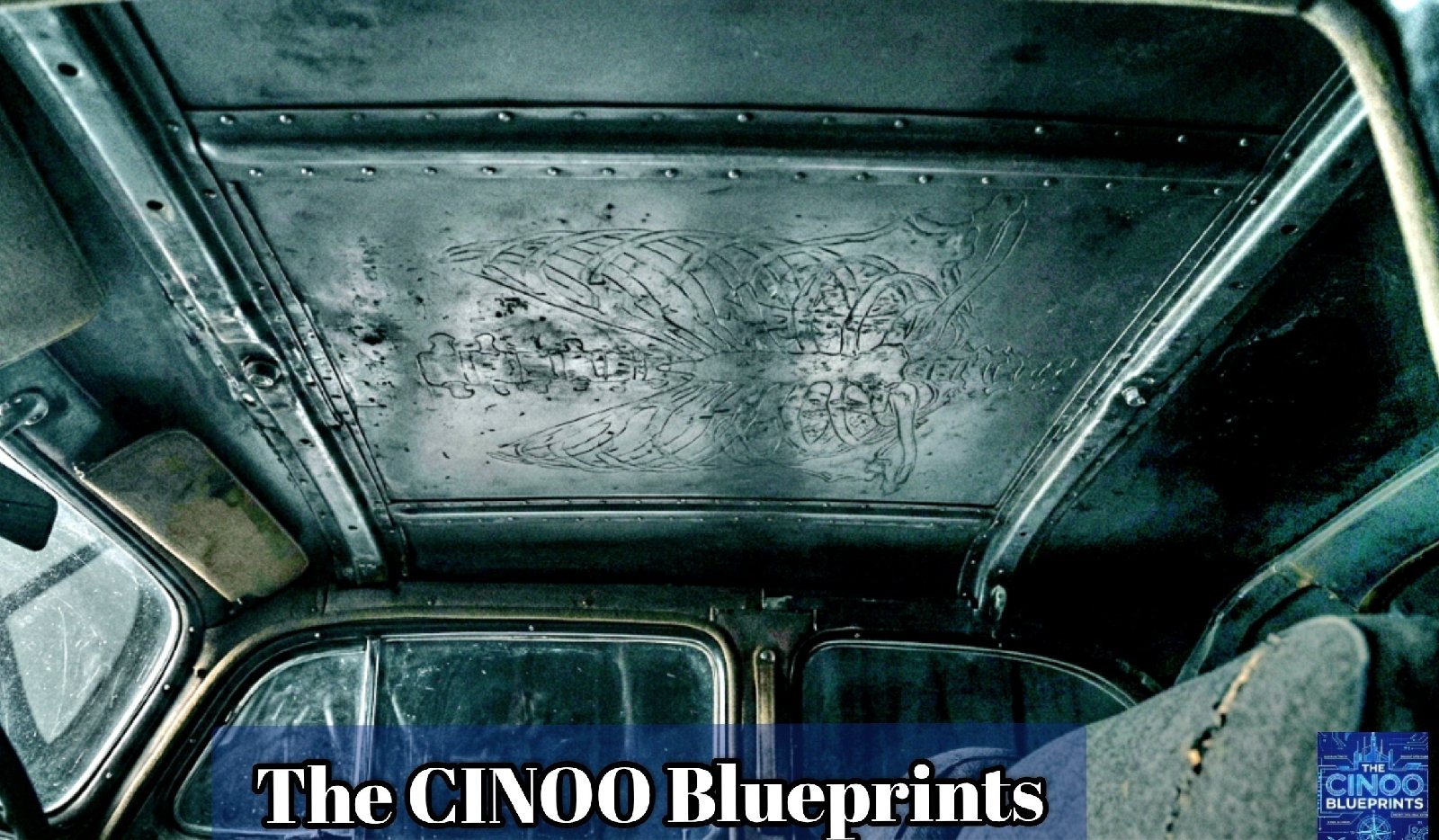
Automotive steel panel symbolizing claustrophobic isolation and restricted breathing
In the 1930s, the earliest sunroofs were heavy detachable steel panels. When closed, you were entombed in absolute darkness.
That steel panel was the ceiling of my childhood for six agonizing months. A relentless cough held my lungs hostage. Day and night blurred into a claustrophobic loop where every breath was a luxury. The world outside moved in vivid color, but my reality was a dark compartment defined only by the sound of my own restricted breathing.
II. 1970s Glass Introduction: Visual Liberation

First generation tempered glass sunroof representing visual liberation and raw human agency
By the 1970s, steel gave way to tempered glass. Even when shut, light could flood the cabin. The sky became visible before physical access was granted.
Then one day the cough disappeared. The sudden lightness felt like an electric surge of raw agency. I still remember the exact texture of the air as I ran toward the local river, my lungs expanding without resistance. Like that 1970s glass roof, the barrier hadn’t vanished — but light had finally broken through. I was no longer blind to my own potential.
III. 1990s Tilt & Slide: Fragmented Opening

The CINOO high school graduation photo marking the authentic starting point of life without faked naming
The 1990s brought the Tilt & Slide mechanism — regulated, selective exposure. You could tilt the edge for a narrow fissure of air, or slide it fully open.
When I burst through the door and told my mother I was healed, her emotions slid open at once — she began to weep. But my father’s reaction remains a blank in my memory. His silence was a roof locked in a tight tilt: enough to acknowledge the outside world, yet sealed against any real emotional transit. Within this fragmented architecture, my high school years became an exercise in selective isolation — attending just enough to satisfy the baseline.
IV. 2000s ~ Present: Panorama — The Illusion of Connection

Modern panoramic glass roof representing the illusion of connection and portal to a new realm
Today, the panoramic sky-lounge stretches seamlessly from windshield to rear deck. The illusion is total: you are told you possess the entire sky.
My high school graduation was that violent shattering of the frame. The restrictive glass of my youth and the narrow attendance logs were broken to pieces. The horizon opened completely — a portal into a new realm where the passenger finally stepped out to become the architect.
[The Final Question for an Architect]
“The systems of the modern world will always try to sell you a larger window, tempting you with the illusion of connection while keeping you safely behind the glass. Look at your own life, your own systems, your own corporate walls.
Are you using your tools to build a bridge back to the tribe, or are you merely polishing the glass wall that keeps you alone?”
“Man remains individual, and all his evolution ever achieves is the expansion of his own cage.”
If this blueprint helped you, follow this blog or share it with someone who’s building in the dark.