🌏 Translate on top right
Status:
Speculative Panics — Deconstructing the artificial premium of raw compute in the current AI memory chip boom.
Setting:
From the high-volume NYC banquet lines to the saturated corporate silicon cartels.
Identity:
The Panicked Tech Cartels (Diners) vs. The Scarcity Architects (The Chefs).
The CINOO’s Paradox
The core contradiction of the AI memory chip boom lies in the illusion of substance. Shark fin itself possesses absolutely no intrinsic flavor. It is rubbery, fibrous, and completely neutral to the palate. Yet, the global elite willingly transfer fortunes for a single bowl. The value is never in the cartilage; it is entirely in the optimized reduction broth—the meticulous extract of Jinhua ham, old chicken, and highly guarded spices that masks the emptiness of the centerpiece.
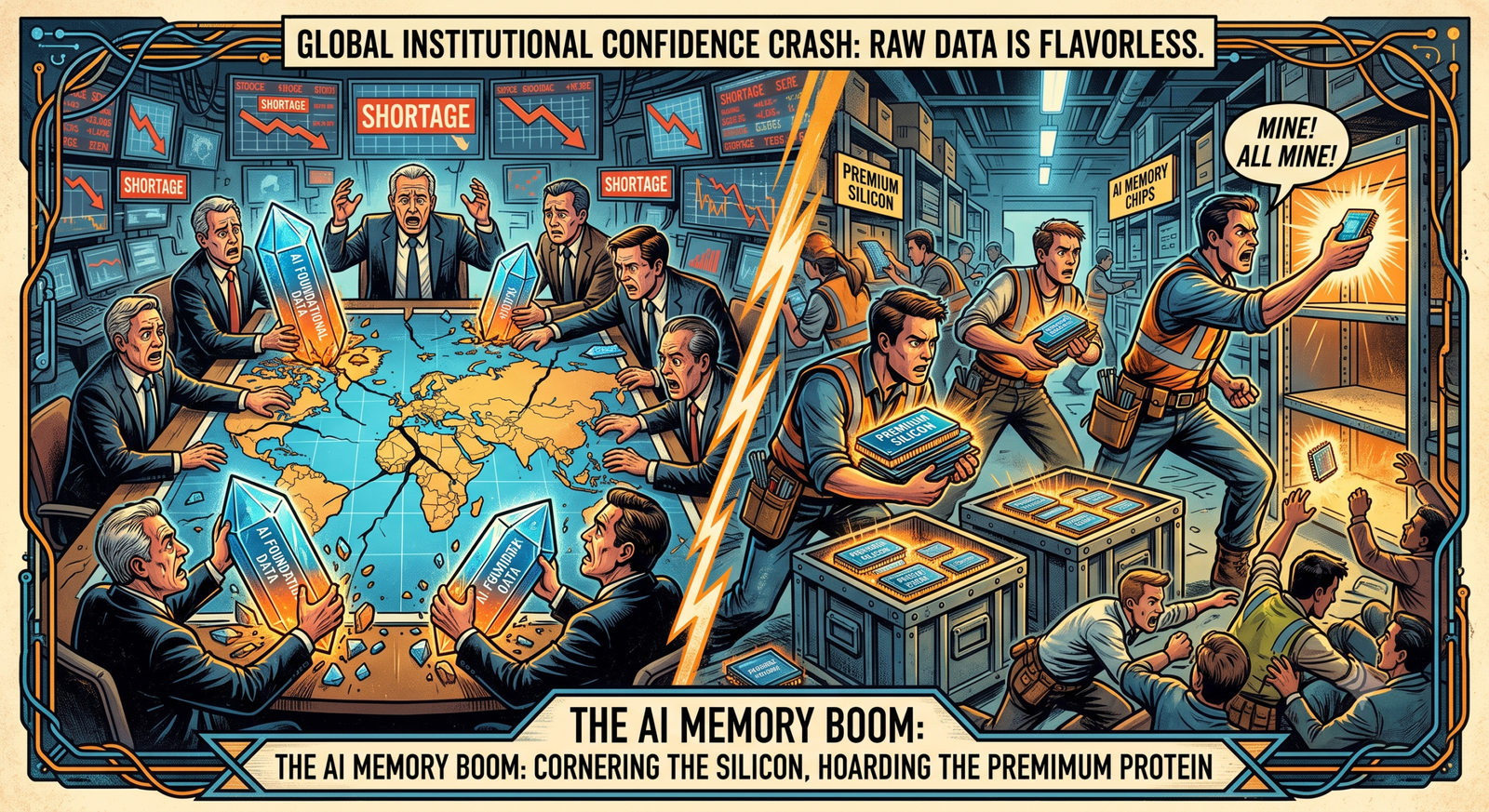
Similarly, silicon without a highly refined, customized algorithmic framework is merely a flavorless shark fin. Tech giants are not panic-buying hardware because they taste a revolutionary future; they are buying it out of pure, unadulterated institutional anxiety, paying an astronomical premium just to display an empty fin.
The Five Courses of Crisis
I. The Prep
The AI memory chip boom began not with a breakthrough in raw computational appetite, but with a sudden, global shortage of institutional confidence. Boards of directors panicked. They realized that their foundational data structures were utterly flavorless without specialized hardware to accelerate them. To frontload their positioning, corporate architects began cornering the supply chain, hoarding raw silicon like desperate line cooks grabbing the last cases of premium protein before a weekend banquet rush.
II. The Cooking
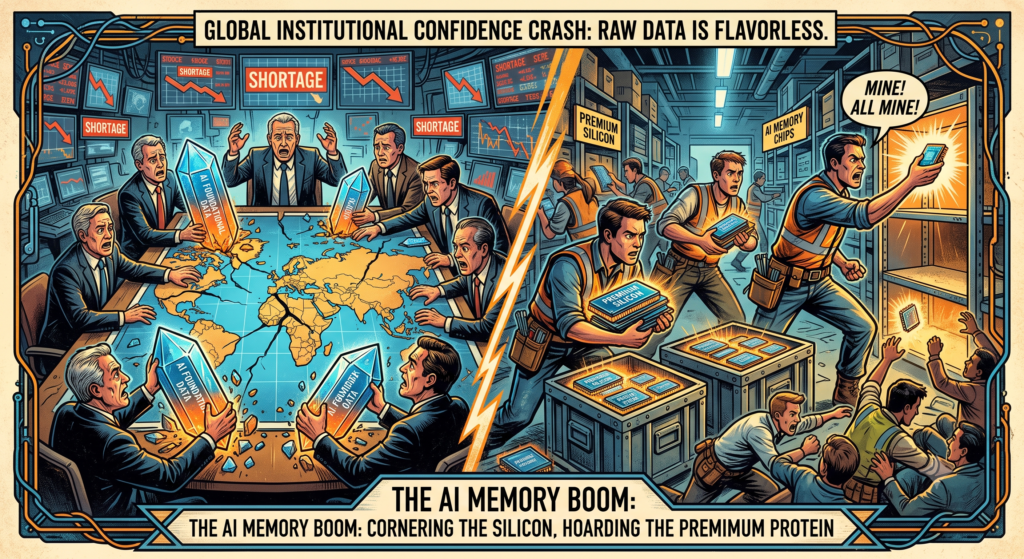
The market quickly melted into a speculative frenzy. As tech giants competed to secure allocations for chips that hadn’t even been manufactured yet, the artificial scarcity escalated. Wall Street analysts fanned the flames, treating the hardware crunch as validation of an epochal shift. Inside the corporate matrix, the heat turned up; companies began burning through massive liquid reserves, heavily subsidizing infrastructure costs just to stay in the game, blending hype and debt into a volatile, boiling reduction.
III. The Taste
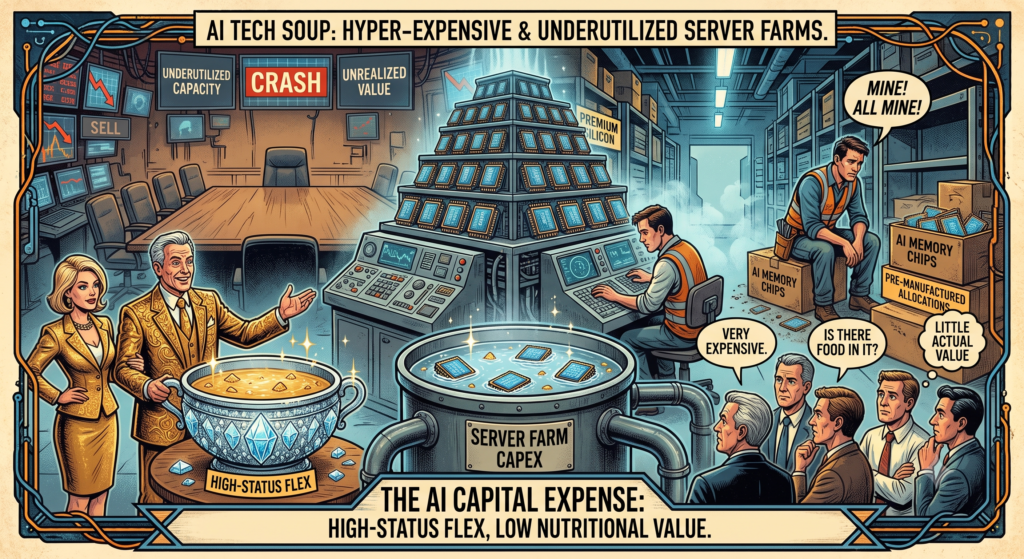
The immediate reality of this tech soup is biting and deeply ironic. Massive data centers are now packed with hyper-expensive, specialized memory chips that sit underutilized, humming quietly in air-conditioned server farms. Executives proudly showcase their massive capital expenditures to shareholders like hostesses flaunting a 24-karat gold-flecked broth to unimpressed guests. It tastes like elite posturing—a high-status, incredibly expensive flex that delivers very little actual nutritional value to the end user.
IV. The Indigestion
Furthermore, the corporate backlash is already simmering beneath the surface of the tech industry. Because the extreme power consumption required to keep these massive silicon banquets running is immense, localized energy grids are starting to stutter. As a result, smaller startup ecosystems are experiencing severe financial starvation. They are completely priced out of the basic ingredients needed to innovate. Meanwhile, mid-level enterprise software teams are realizing a harsh truth. Specifically, their poorly optimized algorithms cannot be saved by simply throwing expensive hardware at the problem, leading to widespread performance stagnation.
V. The Bill
Ultimately, the economic cost of this panic is staggering, shifting the systemic burden downward. Billions of dollars in venture capital have been locked into rapidly depreciating physical assets. Consequently, these assets will become entirely obsolete within two product cycles. In addition, the social cost is a massive diversion of human talent away from solving fundamental algorithmic challenges. Engineers are choosing instead to chase speculative hardware margins. Therefore, society is left holding the invoice for an incredibly overpriced meal, realizing we paid a premium for the status of the dish rather than the substance of the innovation.
The Final Question for Architect
When the speculative fog clears and the high-society banquet finally ends, the question every system architect must face is stark:
“Are you building a legacy based on the temporary scarcity of the raw material, or are you masterful enough to control the process and dictate the recipe?”
“The premium is never paid for the ingredient; it is paid to silence the terrifying whisper of being left behind.” — CINOO
16: Shift and Grid
18: The Salt Matrix
19: The Institutional Hierarchy
Which heat in your own life prepared you for the one you’re facing right now? Tell me in the comments.