🌏 Translate on top right
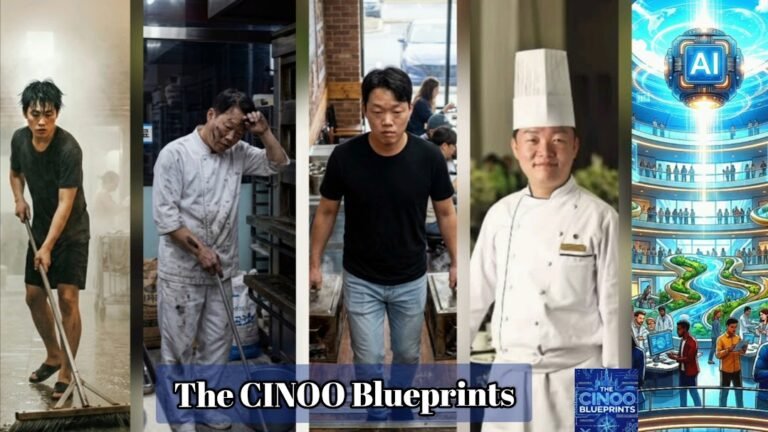
Status: Cultural Realignment — Analyzing the collapse of entry-level human labor grids.
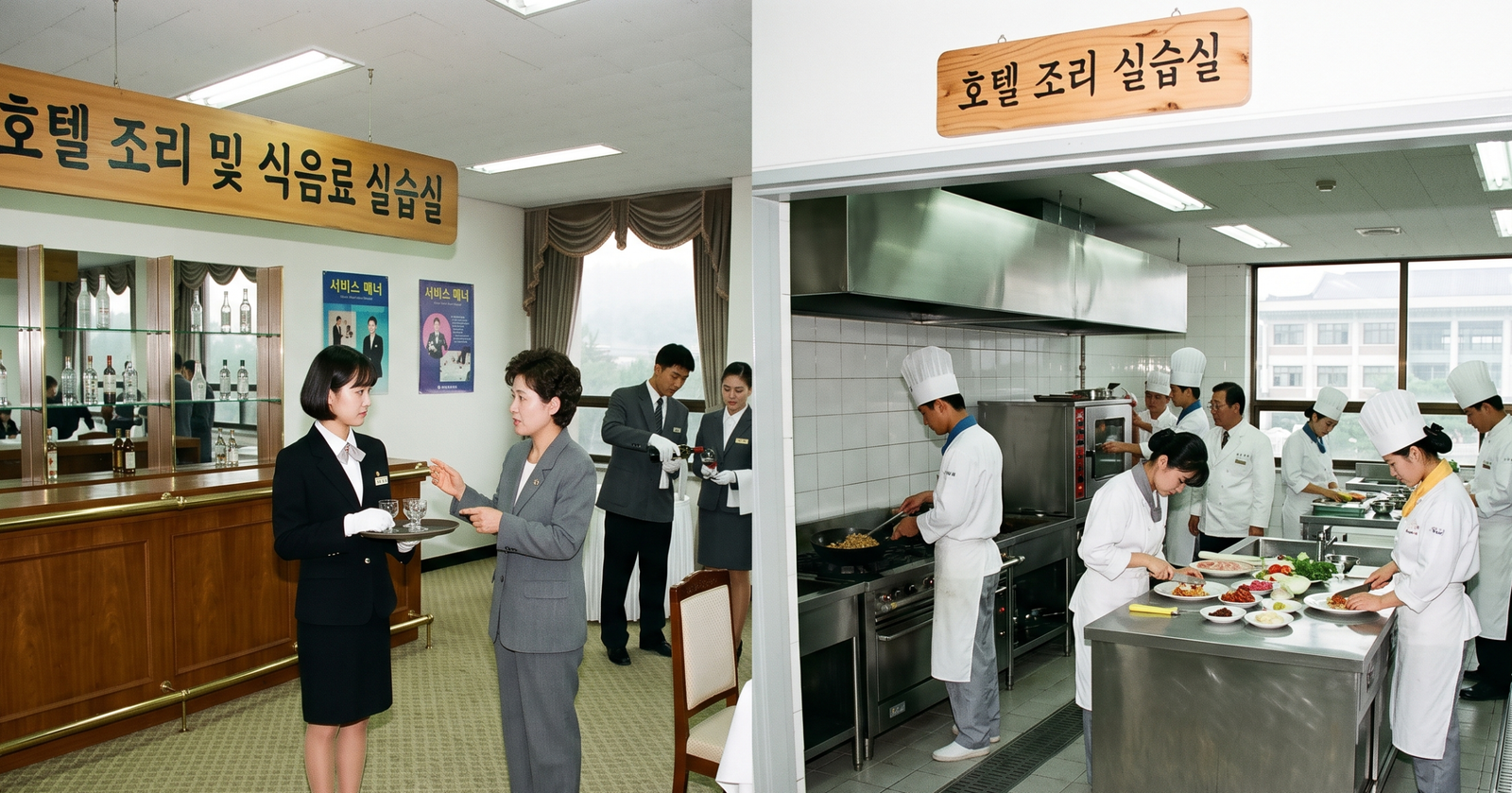
Setting: The Gyeongju Hotel School to the Saturated Corporate Dining Matrix.
Identity: The Creative Realist exposing how the institutional hierarchy traps individual potential.
[The CINOO’s Paradox]
“The Paradox of Vertical Ascent — When an individual perfectly optimizes performance within an institutional hierarchy, they become highly visible to the system, yet completely vulnerable to the macroeconomic shifts that eliminate the hierarchy itself.”
I. The Illusion of the Institutional Hierarchy
The modern institutional framework conditions millions of young minds to believe in a predictable vertical path. Indeed, schools design a strict linear ladder where academic compliance guarantees socioeconomic security. Students consume this narrative blindly during their formative years. Consequently, they invest their raw human potential into metrics that the administrative grid defines. They achieve top marks, secure leadership titles, and assume that the outside economic pyramid will validate their institutional conformity.
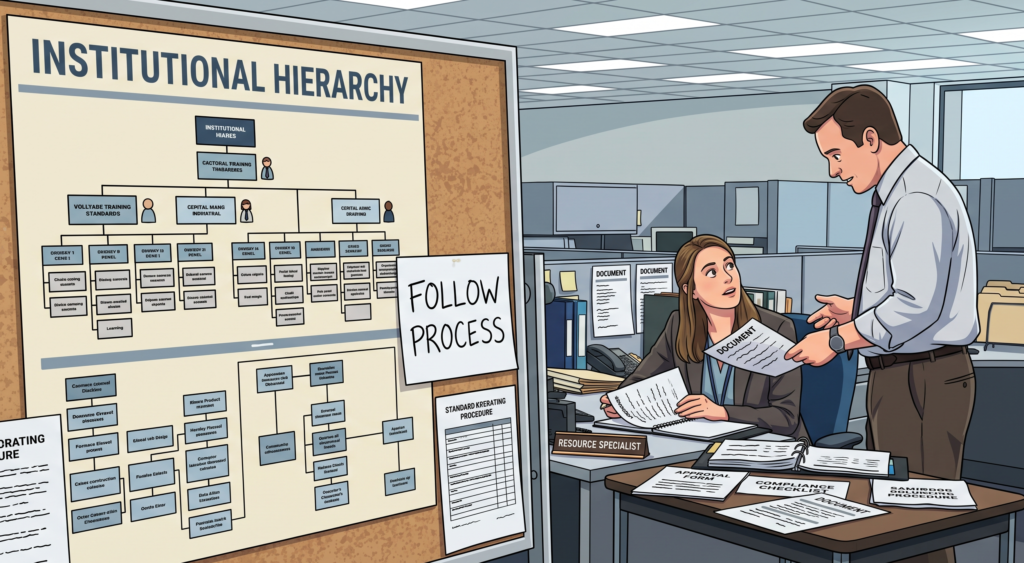
However, this vertical promise operates as a highly calculated conditioning mechanism. The structure does not nurture unique human capabilities or creative independence. Instead, it systematically reshapes vibrant individuals into uniform components for corporate consumption. By the time a student climbs to the top of the academic ladder, they possess high compliance but zero strategic defenses against macroeconomic manipulation. Therefore, the system successfully produces dependent resources rather than autonomous strategists.
II. The Saturated Labor Arena and Job Scarcity
Today, macroeconomic shifts rapidly destabilize the foundational layers of this traditional ladder. The entry-level employment matrix experiences severe structural saturation as automated systems and centralized capital eliminate human tasks. Consequently, millions of highly qualified graduates enter the market only to confront an unprecedented wave of job scarcity. The administrative frameworks that promised a smooth transition into corporate positions now remain silent while human resources degrade in underemployment cycles.
Furthermore, this disruption completely shatters the baseline safety net that previous generations utilized. In a traditional market downturn, an individual could deploy pure physical labor to survive temporary systemic failures. Today, however, artificial intelligence and robotic automation actively target both intellectual and manual entry points. As a result, the next generation faces an economic arena where the bottom rungs of the ladder disappear entirely, leaving them with no space to execute a baseline survival strategy.
III. My Execution Within the Institutional Hierarchy
This structural trap becomes painfully clear when I analyze the architecture of my own past. During my time at the Gyeongju Hotel School, I fiercely optimized my performance within the institutional framework. My previous kitchen experience quickly advanced me to the position of student head chef, where I managed the practical training labs for our professors. Furthermore, my innate creative and musical talents allowed me to lead our department as the head cheerleader during the annual hotel industry sports festival. This massive event served as a major convergence point for the entire Korean hospitality sector.
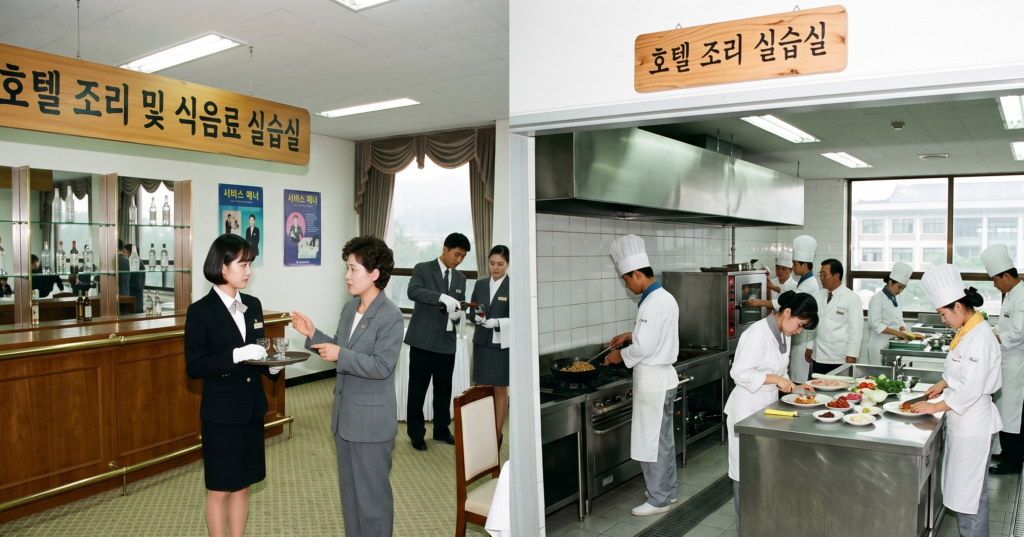
However, despite my high performance, an unexpected economic downturn severely restricted my career options upon graduation. I desperately wanted to enter a five-star luxury property in Seoul. While surviving in a shared apartment with my classmates and working a part-time job at a local pub, two major institutions intercepted my signal. Simultaneously, both the Seoul Millennium Hotel and the Grand Hyatt extended offers. I faced a critical choice between a five-star buffet restaurant and a pastry division.

Ultimately, I chose the buffet line because I knew a future executive chef required comprehensive culinary management experience rather than specialized pastry skills. This strategic decision initiated my entry into the Millennium Hilton Hotel, a massive operation featuring 735 guest rooms and a culinary staff of over 100 professionals. I traded my raw creative energy for the intense discipline of a commercial kitchen. It was a long period of misallocated time, yet that grueling experience became the very condition that shaped my current perspective. Consequently, I became an absolute expert in the mechanics of saturation. The harsh seasoning of my past has now become the analytical salt of my present. Therefore, I can dissect the matrix with ruthless precision and fight for the restoration of individual autonomy.
IV. The Automated Elimination of Entry-Level Opportunity
Today, modern university students face an entirely different and more ruthless machine. When macroeconomic contractions delayed my career, the physical labor market still offered holding zones like local pubs. In those environments, an individual could trade raw hours for survival capital while planning their next corporate ascent. Today, tech-capital structures deploy automated systems that systematically replace these temporary human buffer zones. Digital kiosks, automated logistics, and algorithmic management platforms steadily close the doors to baseline survival labor.
Consequently, the current generation cannot simply work a part-time job to endure an institutional failure. The system actively automates the entry-level opportunities that once allowed an outsider to build real-world resilience. When software constructs the legal briefs, codes the web properties, and operates the service lines, the corporate matrix closes its intake valve completely. Therefore, the modern graduate does not just face a temporary hiring freeze. Instead, they confront the permanent structural elimination of their utility within the automated corporate matrix.
V. Strategic Defenses Against the Institutional Hierarchy
To survive this systemic exclusion, you must immediately abandon the belief that corporate institutions will eventually open their gates for you. The modern corporate complex does not seek high-performing human components anymore; it seeks to eliminate human overhead entirely to maximize immediate technical efficiency. Therefore, waiting for a traditional vacancy within a saturated hierarchy is a mathematical strategy for economic irrelevance. You must stop trading your irreplaceable human time for standardized credentials that the automated machine has already devalued.
Ultimately, your only defense is to completely bypass the corporate gatekeepers and construct your independent digital infrastructure. You must utilize the very tools that threaten the masses to broadcast your unique strategic framework and build an unassailable personal brand. Reclaim your baseline signal by refusing to apply for positions that a software agent can execute better than you. By deploying an autonomous platform, you force the economic grid to interact with you as an independent enterprise rather than a replaceable corporate resource.
[The Final Question for an Architect]
Are you truly educating the next generation to uncover their unique human potential, or are you simply paying an administrative framework to condition them into becoming predictable, replaceable components before the machine discards you entirely?
“Are you spending your irreplaceable human potential attempting to climb a corporate ladder that the machine is actively dismantling from the bottom up?”
15: The Fifth Heat
16: Shift and Grid
18: The Salt Matrix
Which heat in your own life prepared you for the one you’re facing right now? Tell me in the comments.